Martinique
2.2 - 6.2
(teacher perspective)
The Swedish school representatives are Christina and Carina this time. The purpose of this mobility is first to overview the overall progress of the project so far and to review the pedagogical outputs. Secondly we need to identify the usable content for dissemination of the results of the project.








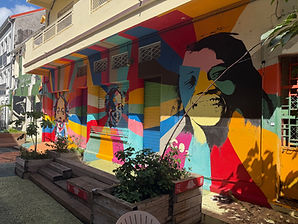

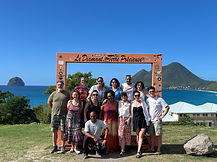


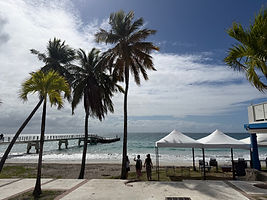
.jpeg)




Day 1 - 2.2
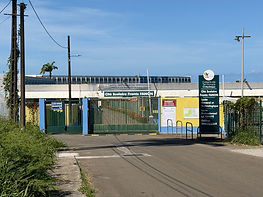
The project next mobility started on Monday, 2:nd February 2026 in the little town of La Trinité at the vocational highschool Frantz Farnon.
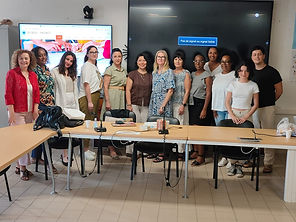
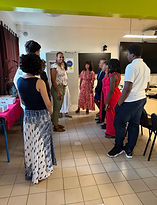
First the headmaster welcomed the participants and gave a speech. We were presented the week´s agenda and we took turns to describe what pedagogical and technical choices every school has chosen and worked with so far. We discussed and organized the next steps according to the responsibilities we took in the beginning of the project.

Day 2 - 3.2
In the morning we started with a meeting for a summery of the previous day. We went through the distributions of adjustments to be carried out by each partner. Every school demonstrated on screen the features they developed in their schools. We talked about the collaborative working arrangements in the next mobility taking place in North Macedonia and we validated the common directions.
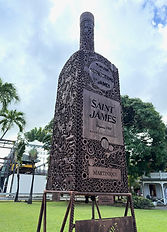
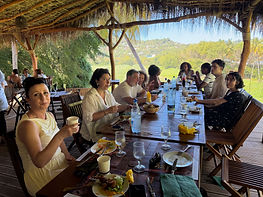
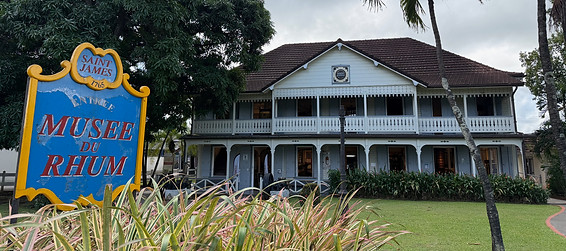
We had lunch together and for the first time we tasted the Carribean food in a wonderful and exotic environment near Saint-Marie. The program also included a visit to the Rhum-museum, where we got a deep dive into Martinique's most classic export: Rhum Agricole. As the island's oldest distillery still in operation (founded in 1765), the visit is divided into several parts covering history and technique.
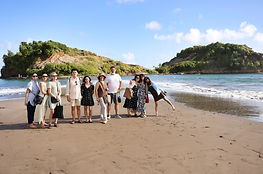
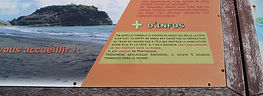
Another stop was the Tombolo, which is a fascinating natural phenomenon located in the town of Sainte-Marie on the island's Atlantic coast. A tombolo is a sandbar that forms between the mainland and an offshore island. What makes the one in Sainte-Marie famous is that it is ephemeral - it appears and disappears with the seasons. it’s one of the rare accessible tombolos in the Caribbean.
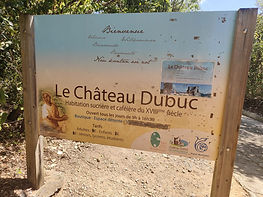
The Château Dubuc in Martinique is protected as a Monument Historique since 1991–1992, Château Dubuc is one of Martinique’s most visited heritage sites. A micro-museum on site helps tell the story of the plantation, its inhabitants, and the broader colonial history of the island.
It was built around 1725 by Louis Dubuc du Galion, grandson of the Norman settler Pierre Dubuc, it was once a large sugar and coffee plantation, worked by enslaved people and linked to the island’s plantation economy. It was also associated with illicit activities such as smuggling and the trafficking of goods and enslaved people.
Day 3 - 4.2
Today we as participants were devided into teams. Each team selected a theme for the day to carry out during a related visit. Our team chose to work with "heritage and memory" by visiting memorial and cultural sights in Fort de France. Each team will deliver a report highlighting the one observed element within the observation and we have chosen The Bibliothèque Schoelcher.
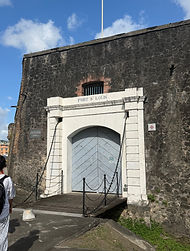
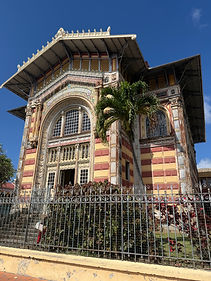
In Fort de France we began to visit the Fort Saint Louis and we continued to the Bibliothèque Schoelcher, which is a remarkable library. The Bibliothèque Schœlcher is one of the most iconic and historically significant landmarks in Fort-de-France. It serves as both a public library and a monument to the abolition of slavery.The library is named after the French politician and abolitionist, Victor Schœlcher who abolished slavery in the French colonies. In 1883, Schœlcher donated his massive collection of over 10,000 books and musical scores to thew General Council of Martinique, with the condition that they be kept in a library open to all to promote education and culture.
We also visited the St Louis Cathedral. The church is an architectural centerpiece in the heart of Fort-de-France. It is a testament to both French history and the resilience of the island's capital.

Day 4 - 5.2
Today we had historical and cultural activities. First we visited the beautiful village of Diamant, in the south of the island, which is the country´s most attractive place for tourists. The landscape is breathtaking and the beach is large and fine sanding.
Not far from there, we visited the historical monument "Memorial Cap 110 - Memorial de l´Anse Caffard" which emerged as a symbol of the atrocities of slavery. In1830, outside the bay a ship full of slaves were wrecked and 46 of them died. This monument has been built in their memory as a tribute to the victims of this tragedy.
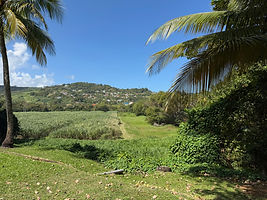
Another topic on the agenda was about bananas and coconut cultivation. They are both important for the country´s export. We have learned that there are several kinds of bananas and coconuts, with different usage and purpose. They offered us to taste coconut´s water, which comes from the yellow coloured coconut. The brown coconut we´re used to in Sweden, have milk instead of water inside.
We learned interesting things about sugar cane and about debris.
Local government in Martinique engages with sustainability in sugar cane agriculture through a mix of public planning, regulation, research support, and on-the-ground practices
Agricultural development strategies aimed at improving food self-sufficiency and reducing dependence on imports while promoting diversification beyond traditional monocultures like sugar cane and bananas
Beyond agriculture, regional planning includes nature reserve management and biodiversity preservation (e.g., Parc naturel régional de la Martinique), which influences how agricultural landscapes — including former cane areas — are conserved or restored
Despite these efforts, sustainability in the sugar cane sector still faces structural challenges:
-
Sugar cane area and yields have been declining, and the sector is under pressure from climate change and economic shifts.
-
There’s ongoing local debate about diversifying agriculture (in part to combat high food prices and improve local food security), which ties into how sugar cane land is managed and whether policy incentives encourage sustainability beyond monoculture.
We also learned how local government deals with debris:
This is actually one of the practical sustainability fronts for sugar cane in Martinique. They keep cane residues on fields (instead of burning)for mulching because this plant debris protects soil from erosion (important on Martinique’s steep terrain),
improves moisture retention and slowly returns organic matter to the soil.
They also re-use industrial debris:like bagasse & vinasse, which is fibrous cane waste and liquid residue from distillation. More explicit, bagasse biofuel to power sugar mills and distilleries, while vinasse becomes fertilizer on cane fields, replacing part of chemical inputs .All this actions push toward circular agriculture and erosion control, adapted to a small tropical island.
To sum all up Martinique’s sugar-cane economy today is driven more by agricultural rum than by raw sugar. That means distilleries are central players in sustainability.
Since Martinique is an EU “outermost region,” its cane sector receives special support. All of this is steered by local government, enforced by environmental rules, strengthened by research, and financially backed by the EU.
The last topic of today was about energy supply. In Martinique, the solar panels are the best way to provide energy. On average, Martinique has about 2,900 hours of sunshine per year. This means roughly 7–9 sunshine hours per day, depending on the season.

Day 5 - 6.2
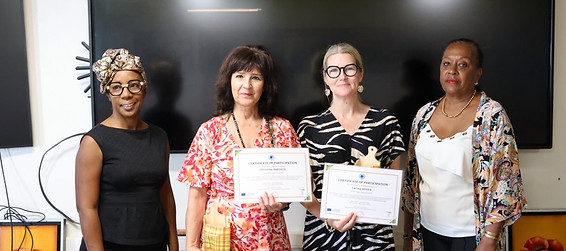
The last day of the project consisted in attendence report and certificate delivery. We went through the contents and general assessments of the activity in Martinique. The results so far had been discussed. We also evaluated our meetings, agenda, timetables, equipment and facilities, the working conditions and the supporting documentation during the whole week.
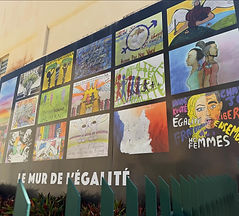
Afterwards we went to the village of La Trinité, to see the children carnival, an annual festivity which has different themes. This year the theme was about social and environmental sustainability and equality for all citizens.